

Looking back on your journey so far: What originally brought you to software development and what keeps you in this profession to this day?
One Christmas I was given a discarded 386 as a present. It was love at first sight (laughs). That love lasted through my studies and beyond. Since I didn't want to move away from Bielefeld after graduating, there weren't many options for me. So I initially squeezed in a teaching degree in maths and history. During my studies, a friend asked me whether I'd be interested in working for a large company in Gütersloh. That's how I slipped into the profession of software developer by chance.
Many years passed and my life was often in flux. Over time, my passion for developing software slowly faded. But DTS managed to reignite that spirit for software development "Made in Herford". It's wonderful to have such a great team around you, one you can rely on and realize major projects with together.
You develop security software at DTS, a German vendor. What was the deciding factor for you personally in choosing this path?
I simply believe that in this day and age it is all the more important to operate and use software from your own country. We must not rely solely on others. With our software development team at DTS, we can develop outstanding software and operate it in our own certified German data centers. We strive to lead the way in this field as innovators and enablers, even though high-quality (security) software from the EU or even Germany was long considered unthinkable. That is a huge motivation for me.
The term "digital sovereignty" is being used more and more frequently. What does it mean for you specifically in your day-to-day work as a developer?
For me, it means not relying exclusively on third-party tools but also conceiving and developing software independently. Our ambition should be to work with as few dependencies as possible and to maintain the greatest possible independence in the end product as well. This way, we deliberately retain control over where our data is stored, who has access to it and which external influences we are truly willing to accept.
In your view, what does it mean to develop security software according to European standards, especially compared to global, often non-European vendors?
By and large, data protection is simply a much stronger focus in Europe. That is simply not the case in the US or in Asia. There, you often pay for "great" features with your data. For us, legal compliance is not an add-on but the foundation. European requirements lead to clear technical decisions, for example regarding access controls.
What role does responsibility play for you as a developer when it comes to sensitive data, critical infrastructures or the long-term trust of customers?
I want to develop software that I would use myself without hesitation. In other words, we create solutions where I don't have to ask myself what happens to my data. As a software developer, I see it as my responsibility to ensure that sensitive data and critical systems are reliably protected. That's why I try to make decisions that are sustainable rather than short-term, even though the latter would certainly be more convenient. In my opinion, long-term customer trust can only be built through a consistent and responsible way of working.
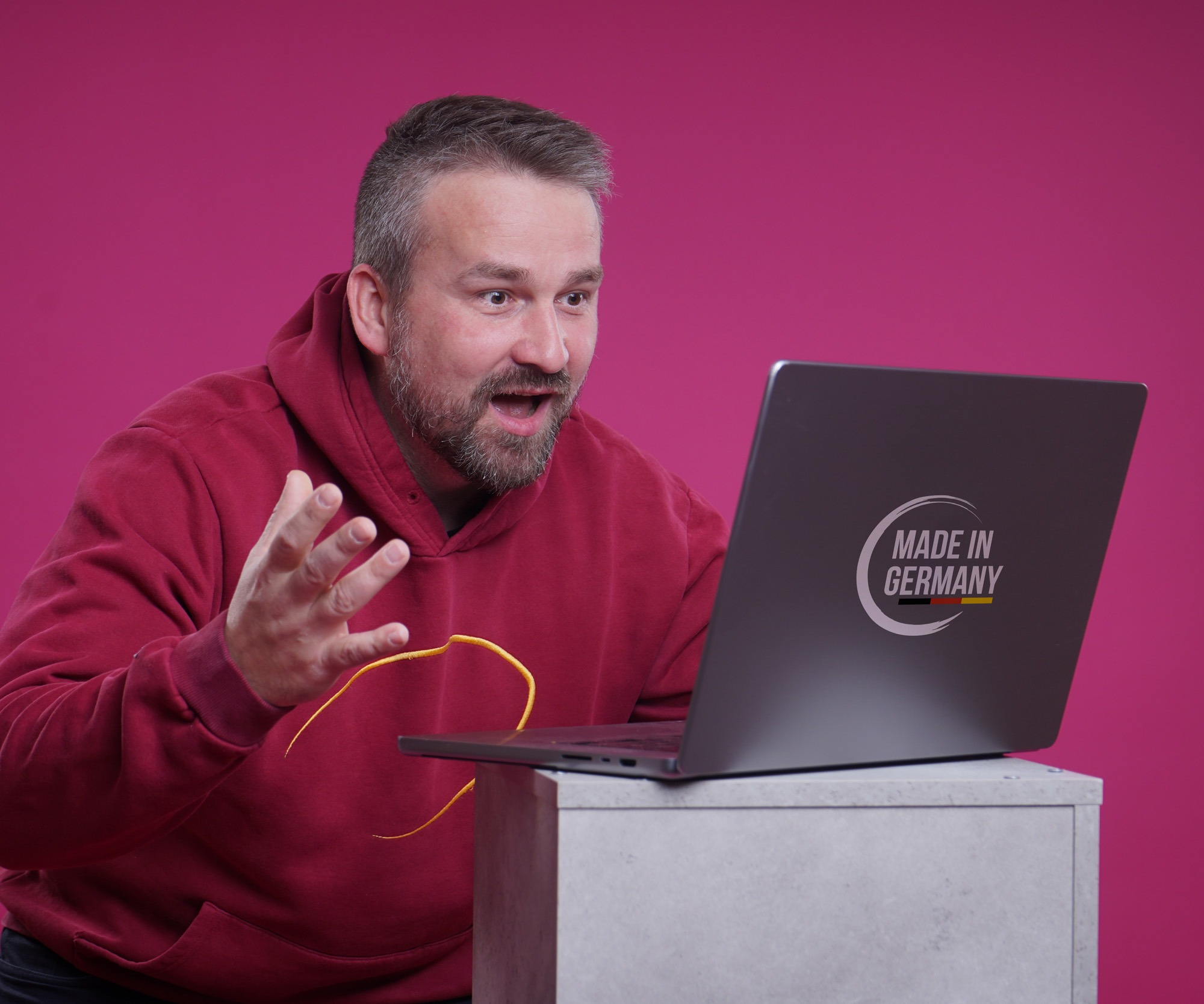
How does the "Made in Germany" self-image of DTS influence your decisions at work? To what extent do values and attitude generally shape the way software is developed?
We want our software to be robust, explainable and reliable in the long term. When I was still at school, "Made in Germany" was not just a label but a mark of quality, reliability and trust. We want to meet these quality standards with our software as well. We develop software "by design" and not "by checkbox". Our solutions should not merely function, they should create trust. We don't just rely on third-party tools but develop functionalities from scratch, because we don't settle for "it works for now".
In your view, what do customers gain today by choosing sovereign, European security solutions?
Above all, customers gain geopolitical and digital independence. They benefit from a significantly higher level of data protection and work with reliable partners whose solutions are subject to European laws such as the GDPR. At the same time, these solutions often stand for greater transparency, audited standards and thus a higher degree of trust. Alongside long-term strategic security, companies quite simply receive tailor-made IT solutions specifically geared to the requirements, regulatory frameworks and threat scenarios of the European market.