












How did you come up with the idea of doing an internship in Japan?
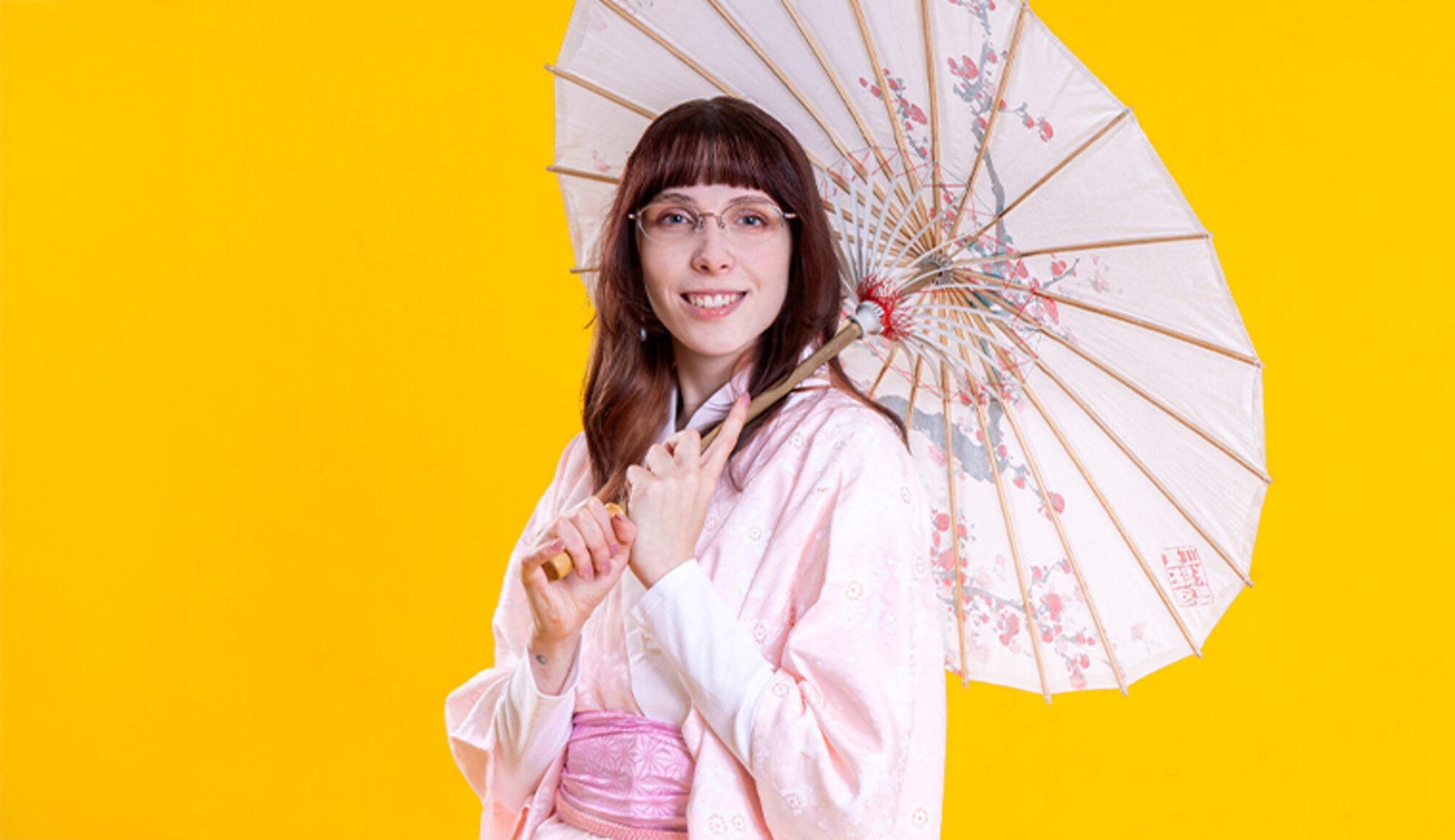
Until the coronavirus pandemic, my vocational school, Carl-Severing-Berufskolleg in Bielefeld, had a direct partner school in Japan. Since this program no longer exists, the school advertised the NRW-wide scholarship this year, which I used to go to Japan. I have always been interested in Japan. Among other things, I have had a pen pal there since I was 13, whom I met in person for the first time during my internship one weekend. It is very rare for students or trainees to travel so far, which is why I was all the more excited about this opportunity.
In your opinion, how does cyber security work in Japan differ from that in Germany?
The most striking difference is the different legal situation. In mid-2025, Japan passed the Active Cyber Defense Law, which allows for proactive measures. The work also looks different as a result. Here, the response is to react to attacks, while companies in Japan try to recognize patterns before an attack even starts or suppress them as early as possible through early detection. I can't say whether this is always 100% successful, but it's an exciting approach. What surprised me, however, is data protection. The approach to this is very different in Japan, although I have to say that I much prefer the data protection laws in Germany. In Japan, far more information is openly available to certain institutions.
What was your personal highlight of the internship?
I don't know if I have a specific highlight, but overall I am very happy with how openly I was welcomed during the internship. I am also thrilled that I was able to see so much of everyday working life in Japan and participate in it so much. Presenting the final result of my work there at the end was really impressive.
Were there any challenges or difficulties you had to overcome during your stay?
There were several things that took some getting used to. The first was the clearly defined structures and specific phrases that you have to say every day, and you first have to get used to when they are appropriate. In Japan, there are a few rules of conduct in the workplace that would be unthinkable in our culture. Initial greetings always involve exchanging business cards, and you have to look closely at the other person's card because it determines the form of politeness to be used in the conversation. In addition, at the end of the working day, even if it is well after closing time, you have to ask your team if you can leave and only then can you leave your seat.
The other thing that takes a lot of getting used to is the commute times and rush hour. In Japan, it's quite normal to spend over an hour on the train to get to work. Of course, that takes up a lot of the day. In addition, the trains are so crowded during rush hour that on some lines, train staff have to try to squeeze everyone onto the train so that the doors can close. That was very unusual for the first few days because you can hardly breathe on the trains. At some point, I started leaving earlier so that I could at least be there before rush hour began.
Are there any aspects of everyday working life in Japan that you would like to introduce in Germany, or specifically at DTS?
There are many things that I would say we have much better in Germany. This applies above all to working hours. However, one thing remains very vivid in my memory: the somewhat different “team meetings” on Fridays. On Fridays between 12 noon and 2 p.m., the lunch break is often combined with a kind of weekly preview or review. The team then discusses the most important events of the past week or the upcoming week—but while walking in the park, drinking tea and coffee together in a small café, or having lunch together.
What was your daily routine like outside of work? What did you do in your free time?
During the week, I often explored Tokyo in the evenings after work, even if it was already after 8 p.m. I went to Shibuya, Akihabara, or Asakusa several times with other scholarship holders or friends. Most of the time, we went out for dinner because it was too late to cook at home. That's why I tried a lot of traditional food. But my highlight is still the conveyor belt sushi restaurants. On weekends or other days off, we spent a night in Kyoto or two nights in Osaka, for example. We also went to Kamakura, which is near Tokyo and has a beach. So there was always a lot to see! And it was definitely more than can be described here. (laughs)
How were you able to apply the knowledge you gained from your training at DTS in Japan? Did it help you?
Absolutely! The company there was enthusiastic about our rotation model and the fact that trainees at our company are taught so much solid basic knowledge during their training and are also able to apply it. In Japan, you often start working for a company after graduating from university without any practical knowledge and have to be taught everything from scratch, so to speak. So I would say that I was definitely able to put the knowledge I had learned so far to good use there.
What did you particularly like about living in Japan?
The convenience – everything just worked together somehow. Train, bus, and tram schedules are coordinated so that you can change trains without rushing. Everything is clean, and even in large crowds, everyone walks orderly on their side of the street. This makes it much easier to get around. My highlight: The streets are much more pedestrian-friendly because most people don't need to drive a car. Just as we have bike lanes, Japan has sidewalks in downtown areas. Except for a few larger traffic circles, everything here is very pedestrian- and cyclist-friendly. Pedestrians often even have right of way on smaller streets. It makes you feel much safer knowing that drivers really do take care.
You also went to EXPO in Osaka, the world exhibition for innovations and ideas for the future. What can you tell us about it?
The EXPO in Osaka was huge. I am very happy that we were invited there by the German pavilion and that fast-lane slots were booked for us in advance, because you can easily end up waiting in line for two hours for a pavilion – even with a reservation. I was lucky enough to see nine pavilions that day. My favorite was the Future City Pavilion, which showcased both newer technologies and developments in the fields of aviation, aerospace, and underwater research, as well as new developments in robotics. Among other things, the Italian pavilion exhibited a variant of the transparent OLED touchscreen, which is intended for use in space travel. I also got a guided tour of the German pavilion, which showcased future technologies and projects within Germany.